Last Updated on February 26, 2026 by Rajeev Bagra
Many learners who complete CS50x walk away with something powerful: exposure to both C and Python.
But few realize how valuable that combination is when mastering NumPy.
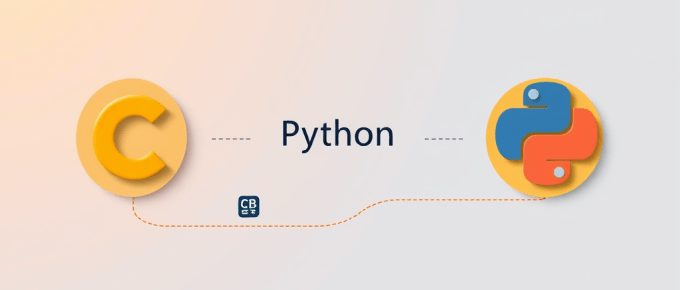
NumPy is written largely in C.
Python is its interface.
Understanding both languages creates a deep technical advantage.
This article explains the connecting link between C and Python in NumPy, and provides a structured roadmap for CS50x graduates who want to build real computational expertise.
Why C Matters for NumPy
CS50x introduces:
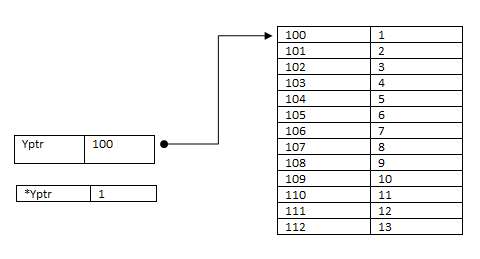
- Memory allocation (
malloc,free) - Pointers
- Arrays
- Structs
- Time complexity
- Manual memory management
These concepts are not just academic.
They explain why NumPy is fast.
Python Lists vs NumPy Arrays
A Python list:
- Stores references to objects
- Is flexible but slower
- Has overhead for each element
A NumPy array:
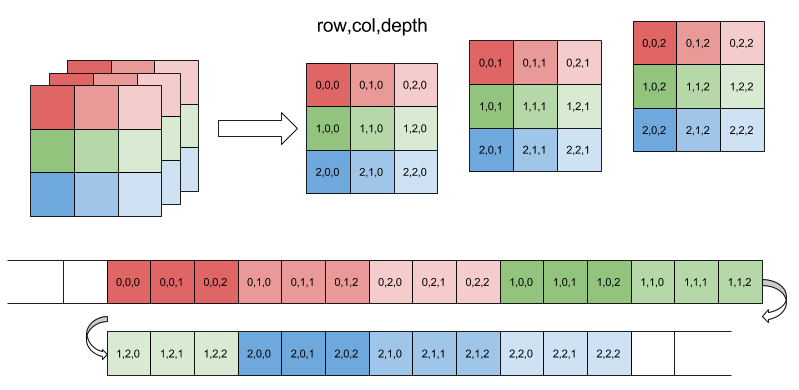
- Stores data in contiguous memory (like C arrays)
- Has fixed data types
- Avoids Python object overhead
- Uses vectorized C loops internally
NumPy feels like Python.
Underneath, it behaves like optimized C.
The Bridge: How Python Talks to C
Python is not slow by design.
It is slow when doing repeated interpreted operations.
NumPy solves this by:
- Writing performance-critical code in C
- Exposing it through Python APIs
- Using compiled loops instead of Python loops
This hybrid model is why:
- Matrix multiplication is fast
- Linear algebra scales efficiently
- Machine learning libraries depend on NumPy
Understanding C helps learners understand:
- Memory layout
- Cache efficiency
- Data types (
float32vsfloat64) - Why vectorization beats loops
The NumPy Internal Architecture (Conceptual View)
- Python calls a NumPy function.
- That function triggers optimized C code.
- The C code performs computations on raw memory.
- Results are returned as NumPy arrays.
This is similar to how:
- scikit-learn
- TensorFlow
- PyTorch
achieve performance at scale.
Learning Path for CS50x Graduates
Since CS50x already covers C and Python, learners are in a strong position.
Below is a structured roadmap.
Stage 1: Revisit C with a Performance Lens
Focus Areas:
- Arrays vs pointers
- Memory allocation
- Stack vs heap
- Time complexity analysis
- Cache locality
Helpful resource:
CS50 Notes
https://cs50.harvard.edu/x/
Optional deeper dive:
https://www.geeksforgeeks.org/c-programming-language/
Goal:
Understand how memory layout impacts speed.
Stage 2: Revisit Python with Internal Awareness
Instead of just writing Python code, ask:
- How are lists stored?
- What is an object reference?
- Why are loops slow?
- What does dynamic typing cost?
Recommended:
Official Python docs
https://docs.python.org/3/tutorial/
Stage 3: Master NumPy Foundations
Learn:
ndarray- Vectorization
- Broadcasting
- Data types
- Memory views vs copies
Beginner guide:
https://numpy.org/devdocs/user/absolute_beginners.html
Documentation:
https://numpy.org/doc/stable/
At this stage, learners begin to see C concepts reappear inside NumPy.
Stage 4: Understand Vectorization vs Loops
Experiment:
- Write a loop-based Python solution.
- Write a NumPy vectorized solution.
- Benchmark both.
This builds intuition about:
- Interpreter overhead
- Compiled execution
- Performance scaling
Stage 5: Learn About C Extensions in Python
To deeply connect C and Python:
Study:
- CPython internals (optional advanced topic)
- C extensions
- Cython (optional)
C API documentation:
https://docs.python.org/3/c-api/
This stage is optional but powerful for advanced learners.
Stage 6: Apply in Real-World Contexts
Once C and NumPy connections are clear, build:
1⃣ Linear Regression from Scratch
Using only NumPy.
2⃣ Gradient Descent Implementation
3⃣ Monte Carlo Simulation
4⃣ Basic Neural Network
This reinforces:
- Matrix multiplication
- Optimization
- Vectorized computation
Why This Path Builds Expertise
Most Python learners use NumPy as a tool.
CS50x graduates can understand it as infrastructure.
That is a major difference.
Understanding C concepts allows developers to:
- Optimize code
- Avoid unnecessary copies
- Use correct data types
- Write scalable numerical systems
This matters in:
- AI engineering
- Quantitative finance
- Scientific research
- High-performance backend systems
Popular Ecosystems Built on This C + NumPy Model
The hybrid C + Python performance model powers:
- SciPy
- pandas
- OpenCV
And forms the foundation of modern AI infrastructure.
Suggested 10-Week Expertise Plan
Weeks 1–2
Revisit C memory concepts
Weeks 3–4
Deep NumPy fundamentals
Weeks 5–6
Linear algebra + broadcasting mastery
Weeks 7–8
Build ML algorithms from scratch
Weeks 9–10
Performance benchmarking + memory optimization
Final Insight
CS50x provides something rare:
Exposure to both low-level systems programming and high-level abstraction.
NumPy sits exactly between those worlds.
C explains how memory works.
Python provides accessibility.
NumPy connects both into computational power.
For learners serious about AI, scientific computing, or quantitative systems, mastering that bridge is what separates users from experts.