Last Updated on November 9, 2025 by Rajeev Bagra
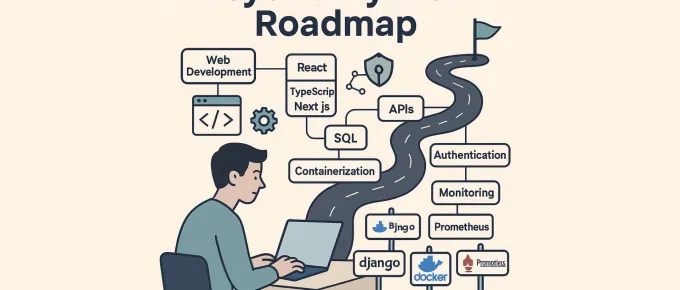
You’ve done CS50x and CS50p—nice! Now it’s time to turn “I can code” into “I can ship a product.” Below is a lean roadmap of skills beyond Python that make you a well-rounded builder of real, revenue-generating applications, with popular, free resources for each step.
1) Web foundations (so your ideas can reach users)
- HTML/CSS/HTTP, browser APIs, accessibility, performance.
Learn & reference as you build.
Free resources: MDN Web Docs (gold standard) (MDN Web Docs)
Hands-on curricula: Full Stack Open (modern JS/TS + React/Node) and The Odin Project (full web path). (fullstackopen.com)
Also, freeCodeCamp’s full platform and YouTube channel. (FreeCodeCamp)
Why this matters: Even if your backend is Python, your customers “see” the web. Strong web literacy shortcuts endless bugs and rewrites.
2) Frontend you can ship (React + TypeScript + Next.js)
- React for UI, TypeScript for fewer runtime bugs, Next.js for routing, data-fetching, and SEO.
Free resources: React docs, TypeScript Handbook, Next.js docs. (React)
Milestone project: Build a small dashboard (auth + CRUD) with Next.js (TS) that consumes an API you’ll build in Step 3.
3) Production-grade APIs (FastAPI/Django)
- FastAPI for fast, typed web APIs with automatic docs; Django when you want batteries-included (admin, ORM, auth).
Free resources: FastAPI docs; Django docs & “Getting started.” (fastapi.tiangolo.com)
Milestone project: Ship a REST API for your dashboard. Add pagination, filtering, and background tasks.
4) Data that doesn’t crumble (SQL + schema design)
- PostgreSQL + solid relational design. Learn indexing, transactions, migrations, and SQL joins.
Free resources: PostgreSQL docs; SQLBolt interactive lessons; freeCodeCamp’s relational DB track. (PostgreSQL)
Level up: Skim the “Twelve-Factor” principles to keep config, migrations, and environments sane. (12factor.net)
5) Git, CI/CD, and containers (so updates are boring, not scary)
- Git mastery (branching, rebasing), GitHub Actions for tests/deploys, Docker for reproducible runs.
Free resources: Pro Git (free book), Git docs, Docker “Get Started,” GitHub Actions docs. (git-scm.com)
Security note: Keep Git up-to-date; recent CVEs emphasize patching and cautious submodule usage. (TechRadar)
6) Auth, security, and HTTPS by default
- Web app risks (OWASP Top 10), OAuth/OpenID Connect for delegated auth, TLS via Let’s Encrypt.
Free resources: OWASP Top 10; PortSwigger Web Security Academy (free, hands-on); Let’s Encrypt “Getting started”; OAuth 2.0 simplified guides. (OWASP Foundation)
Milestone: Add email/password + OAuth login, rate-limit sensitive endpoints, serve everything over HTTPS.
7) Payments & platform integrations (so your app makes money)
- Stripe for subscriptions, invoices, payment links. Learn webhooks (signing, retries, idempotency).
Free resources: Stripe docs & API reference; webhook best practices (GitHub). (Stripe Docs)
Milestone: Offer a trial plan → paid plan with Stripe Checkout; store customer & subscription state in Postgres.
8) Observability: logs, metrics, errors
- Know what your app is doing in prod.
Free resources: Prometheus (metrics) + Grafana (dashboards); Sentry for Python (error & perf tracking). (prometheus.io)
Milestone: Add app metrics (request latency, error rate), a Grafana dashboard, and Sentry alerts.
9) System & product thinking (build for today, not fantasy scale)
- System design basics (caching, queues, consistency), SRE practices (SLOs, monitoring, on-call).
Free resources: System Design Primer (GitHub); Google’s SRE books online; Twelve-Factor App. (GitHub)
Milestone: Write SLOs for your app (e.g., 99.9% uptime for API), define error budgets, and a rollback plan.
A simple, motivating learning plan
Month 1: Ship a vertical slice
- Frontend (React+TS+Next.js) → Backend (FastAPI/Django) → Postgres → Docker.
- Deploy a minimal paid feature with Stripe Checkout. (Next.js)
Month 2: Hardening & automation
- Tests in CI (GitHub Actions), HTTPS via Let’s Encrypt, basic security review (OWASP), error tracking (Sentry). (GitHub Docs)
Month 3: Operate like a pro
- Add Prometheus/Grafana dashboards, define SLOs, document runbooks, and practice a blue-green/rollback deploy. (prometheus.io)
What to build (practical project ideas)
- Micro-SaaS: “Client Portal” (file sharing + comments + invoices).
- Vertical CRM: Simple pipeline, notes, email reminders, Stripe billing.
- Internal Ops Tool: Dashboard over Google Sheets/CSV, then move to Postgres.
Each idea naturally touches auth, CRUD, payments, webhooks, and observability—exactly the muscles you want to train.
Keep the fire burning (habits that compound)
- Ship weekly: Use small PRs + automatic deploys (Actions). (GitHub Docs)
- Read one spec/concept a week: e.g., TypeScript section, OWASP item, or 12-Factor principle. (TypeScript)
- One lab per week: PortSwigger labs are superb. (PortSwigger)
- Postmortems > perfect plans: Borrow SRE culture early. (sre.google)
TL;DR Stack to get “business-ready”
- Frontend: React + TypeScript + Next.js. (React)
- Backend: FastAPI or Django (pick one per project). (fastapi.tiangolo.com)
- Data: PostgreSQL + migrations + indexes. (PostgreSQL)
- Infra: Git, GitHub Actions, Docker. (git-scm.com)
- Security/Payments: OWASP, Let’s Encrypt, OAuth, Stripe. (OWASP Foundation)
- Observability: Prometheus, Grafana, Sentry. (prometheus.io)
- Operating principles: Twelve-Factor + SRE. (12factor.net)